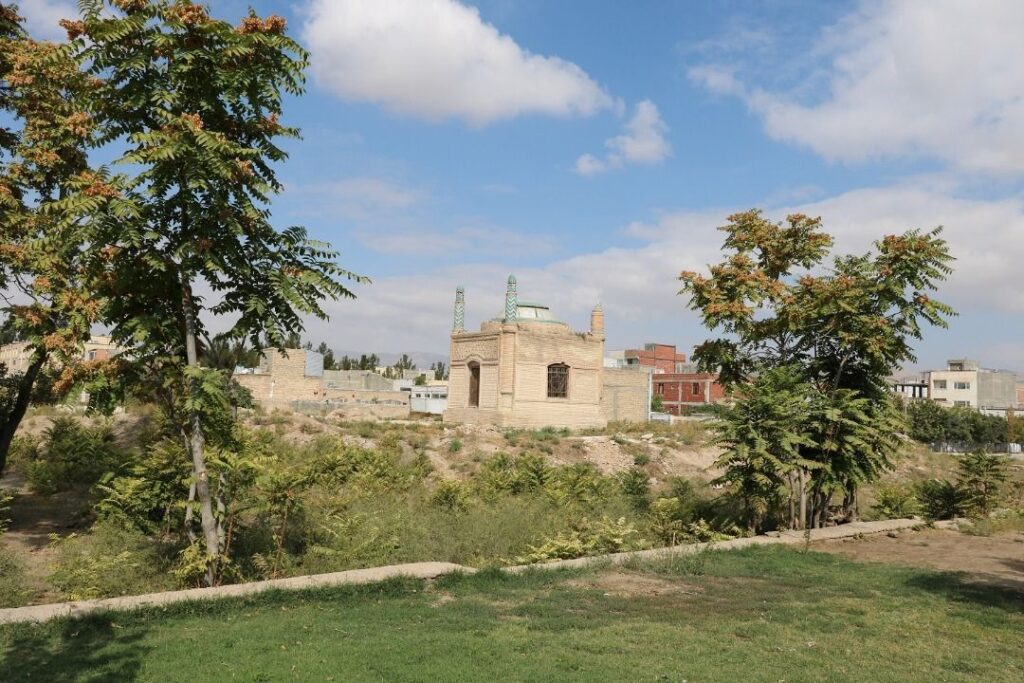
At the heart of Bojnourd’s Javadieh Crossroads, a brick dome and four jewel-like minarets are not just a historical monument; they are silent witnesses to a century of epic history, the preservers of the names of seven martyrs, and the embodiment of resistance against the unbelievable storm of history. Today, exactly a century after those turbulent days, the “Tomb of the Martyrs” more than ever delivers an eternal message of loyalty to the ears of time.
Seven lives; against eight hundred people
The narrative of this tomb begins on the morning of July 9, 1926, when the heavy shadow of the “Lehak Khan” rebellion hung over the city of Bojnourd. While the wave of chaos shattered the order of the city and many officials and commanders fled the city at night amid uncertainty, out of the eight hundred people stationed in the Bojnourd garrison, there were only seven fearless men who stood firm like a rock in the face of the merciless storm.
These seven men, who included two lieutenants and five army officers, fought the rebels not for position or position, but to protect the honor of the homeland and maintain the security of the people. Although the resistance of these seven men against the turmoil of chaos led to their captivity, their will was never bound.
From Red Square to the Eternal Mausoleum
On Monday evening, July 13 of that year, after the most dramatic trial in history, known as the “Communist Court,” the death sentences were issued for these seven heroes. Mohammad Badranloui and Reza Soltani (two loyal stalwarts) and Hassan Vakili, Ebrahim Aghaei, Hassan Taheri, Ali Akbar Shoghafi, and Allahgholi Jamali (five innocent officers) sacrificed their lives for the homeland and were martyred in Bojnord’s Red Square.
After the army’s final victory over the rebels, a special monument was built for these seven dear martyrs to engrave their names in the collective memory of this city; a monument that is known today as the “Martyrs’ Tomb.”
Epic architecture and national identity card
The Martyrs’ Tomb, with its unique architecture and stunning brickwork, evokes the splendor of bygone eras. The dome, which structurally and aesthetically evokes the grandeur of the tomb of Amir Ismail Samani, and the four 5.2-meter minarets that stand at its four corners like jewels in a ring, evoke the grandeur of this historical event in your mind every time you look at it.
It is worth noting that this building, due to its unparalleled historical and artistic values, has been registered under registration number 9241 in the list of national monuments of Iran; an identity card that confirms the authenticity and importance of this monument in the country’s cultural heritage.
Restoration: Paying homage to the unsung heroes
Today, a century has passed since those bloody and epic days, the preservation and restoration of this historical monument, which is on the agenda of the Cultural Heritage Administration, is more than a protective duty, it is a “tribute” to the seven sacrifices. The goal of these measures is that future generations will be able to learn the true meaning of resistance in the shadow of this brick dome, through the narrative of the courage of these seven people.
The Martyrs’ Tomb is not just a building, but a legacy of blood, faith, and loyalty that will forever beat in the heart of Bojnurd.